Auto Wrecking and Flatbed Towing in Normal, Illinois
ome vehicles are better moved with all four wheels completely off the roadway. That can include cars with collision damage, low ground clearance, broken suspension components, damaged wheels, or drivetrain problems that make conventional towing less appropriate.
Flatbed towing gives the operator more control over how the vehicle is loaded and transported. A non-running car may be winched onto the bed, while a vehicle with wheel or steering damage may need to be positioned carefully so damaged components are not placed under additional stress.
Before loading, several things need to be considered: whether the wheels can roll, how the vehicle is sitting, its ground clearance, drivetrain, and any damage around the suspension or body. These details help determine how the vehicle should be moved and where it should be secured for transport.
Normal Towing Pros provides flatbed towing and vehicle recovery for disabled, damaged, and non-running vehicles throughout Normal and the surrounding Bloomington-Normal area.
When Flatbed Towing Makes More Sense
Flatbed towing is often useful when letting the vehicle roll on its own wheels could create additional problems. After a collision, for example, a bent wheel, damaged suspension part, or body panel rubbing against a tire may make conventional towing a poor choice.
Keeping the entire vehicle on the truck bed can also be beneficial for many AWD and 4WD vehicles, low-clearance cars, and vehicles that cannot steer or roll normally. Once loaded, the vehicle can remain stationary on the bed rather than relying on damaged wheels or drivetrain components during transport.
The pickup location can affect the recovery process too. A disabled vehicle in a parking lot may be straightforward to access, while one stopped along I-55, I-74, Veterans Parkway, or another busy road may require more careful positioning and loading.
Flatbed service is not automatically necessary for every tow. The goal is to use it when the vehicle’s condition, drivetrain, or damage makes it the more controlled and practical way to get the vehicle to a repair shop, body shop, storage facility, residence, or other requested destination.

When Flatbed Towing Is the Better Fit
Flatbed towing keeps the vehicle completely off the pavement during transport, which can be useful when the wheels, suspension, or drivetrain should not be relied on to move normally. It is often chosen for vehicles that are damaged, sit low to the ground, or cannot safely roll under their own power.
Flatbed service can make sense for:
- AWD and many 4WD vehicles
- Collision-damaged cars and SUVs
- Vehicles with steering or suspension damage
- Low-clearance vehicles
- Cars with bent or damaged wheels
- Non-running vehicles
- Longer-distance transport when minimizing drivetrain movement is preferred
Loading method matters just as much as the truck itself. A vehicle that cannot drive or roll normally may need to be winched onto the bed, positioned carefully, and secured at appropriate tie-down points before the trip begins.
Around Normal, the recovery process can vary depending on where the vehicle is stopped. A car in a parking lot near Illinois State University may be easy to access, while a disabled vehicle along I-55, I-74, or Veterans Parkway may require more careful positioning because of traffic and limited working space.
Flatbed towing is not necessary for every vehicle. It is most useful when the condition, drivetrain, clearance, or damage makes conventional towing less practical and a fully supported transport method is the better choice.
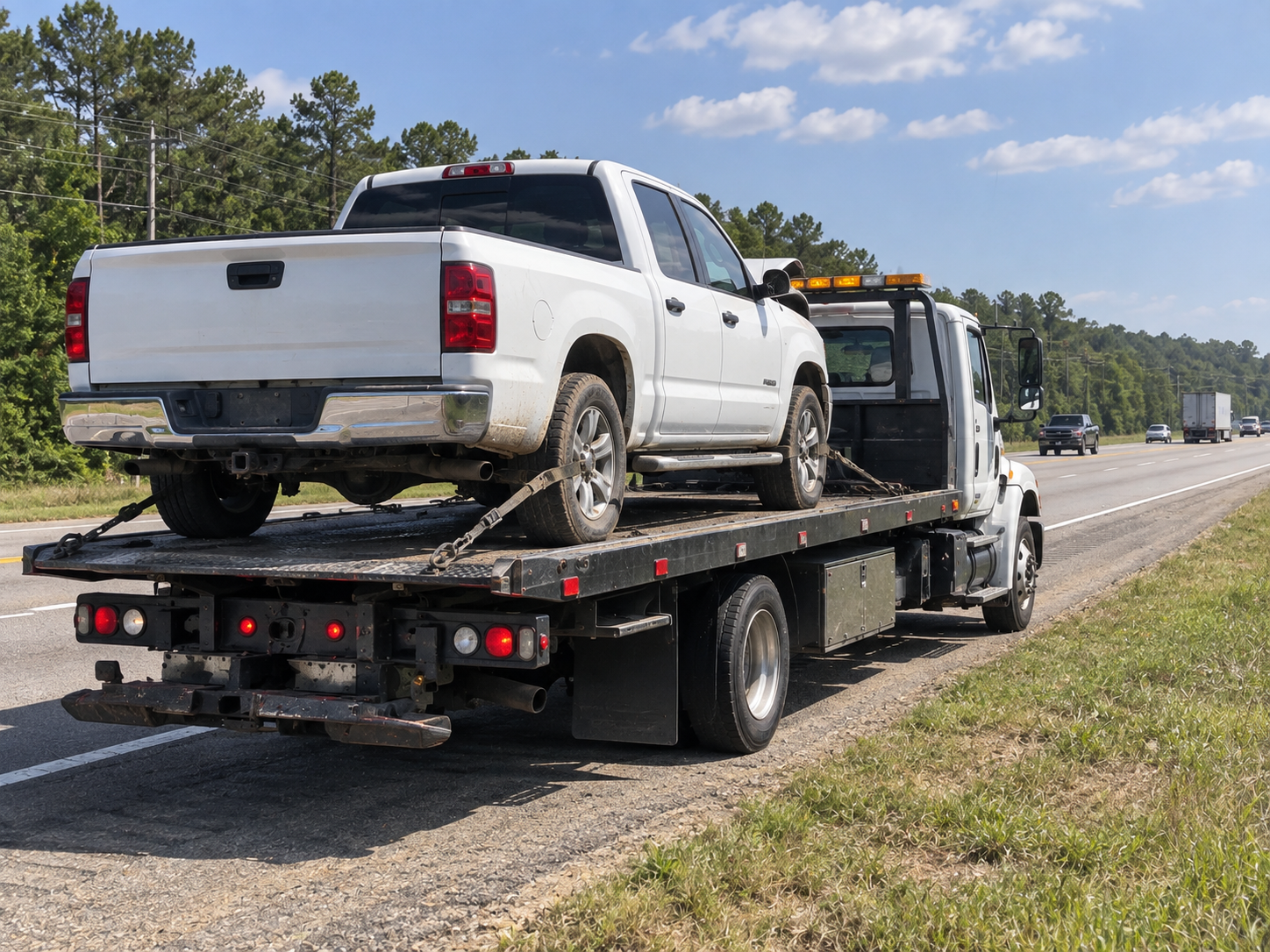
Recovering Vehicles With Major Damage
Some vehicles cannot be handled like a routine breakdown. Severe collision damage, broken suspension parts, bent wheels, or a car resting in an awkward position can all make recovery more complicated before transport even begins.
The first step is understanding how the vehicle is sitting and whether it can roll, steer, or be accessed normally. A car with locked wheels, collapsed suspension, or damage that leaves it partly off the roadway may need to be winched onto a flatbed instead of moved with a conventional towing setup.
If the vehicle is no longer repairable, it may need to be transported to a salvage yard, storage facility, or another designated location. The priority is to recover it without placing additional stress on damaged components or creating unnecessary risk during loading.
When you call, mention anything that could affect recovery, including wheel damage, broken suspension parts, leaking fluids, or an unusual vehicle position. Those details help determine what equipment may be needed before arrival.
What Should Happen to Your Vehicle After a Collision?
A car does not have to look completely wrecked to be unsafe after an accident. Damage to the steering, suspension, tires, wheels, cooling system, or body can make continued driving risky even when the engine still starts.
If the vehicle does not feel normal after a crash, towing it gives you a chance to have it inspected before additional damage occurs. Accident-damaged vehicles can be transported to a body shop, repair facility, storage yard, residence, or another requested destination.
Before pickup, it helps to mention visible problems such as:
- Bent or damaged wheels
- Tires that will not hold air
- Fluid leaks
- Deployed airbags
- Steering or suspension damage
- Body panels contacting a tire
- A vehicle that cannot roll or steer normally
Those details can help determine whether flatbed towing, winching, or another recovery method is the better fit.
If the collision happened along I-55, I-74, Veterans Parkway, or another busy road around Normal, personal safety comes first. Follow the directions of police or emergency personnel at the scene and avoid driving a vehicle that no longer operates normally.
When a Vehicle Can’t Move Normally
Some disabled vehicles cannot simply be driven onto a tow truck or pulled with a standard towing setup. A damaged wheel, broken suspension component, steering failure, drivetrain problem, or major mechanical issue can leave the vehicle unable to roll or steer the way it should.
In those situations, flatbed towing can provide more control during recovery. The vehicle may be winched onto the bed instead of relying on its own wheels to move. That can be especially useful after a collision or when damaged suspension, steering, or wheel components make normal loading difficult.
Before the vehicle is moved, we look at anything that could affect the recovery process. Locked wheels, low ground clearance, leaking fluids, loose body panels, or an awkward position can all change how the vehicle needs to be approached, loaded, and secured.
The priority is to avoid putting additional stress on parts that may already be damaged. Once the vehicle is positioned and secured on the truck, it can be transported to a repair facility, body shop, dealership, residence, storage location, or another destination you choose.
If your vehicle cannot roll, steer, or move safely on its own, let us know what happened and what condition it is in when you call. That information helps determine whether winching, flatbed towing, or another recovery method makes the most sense before the truck arrives.
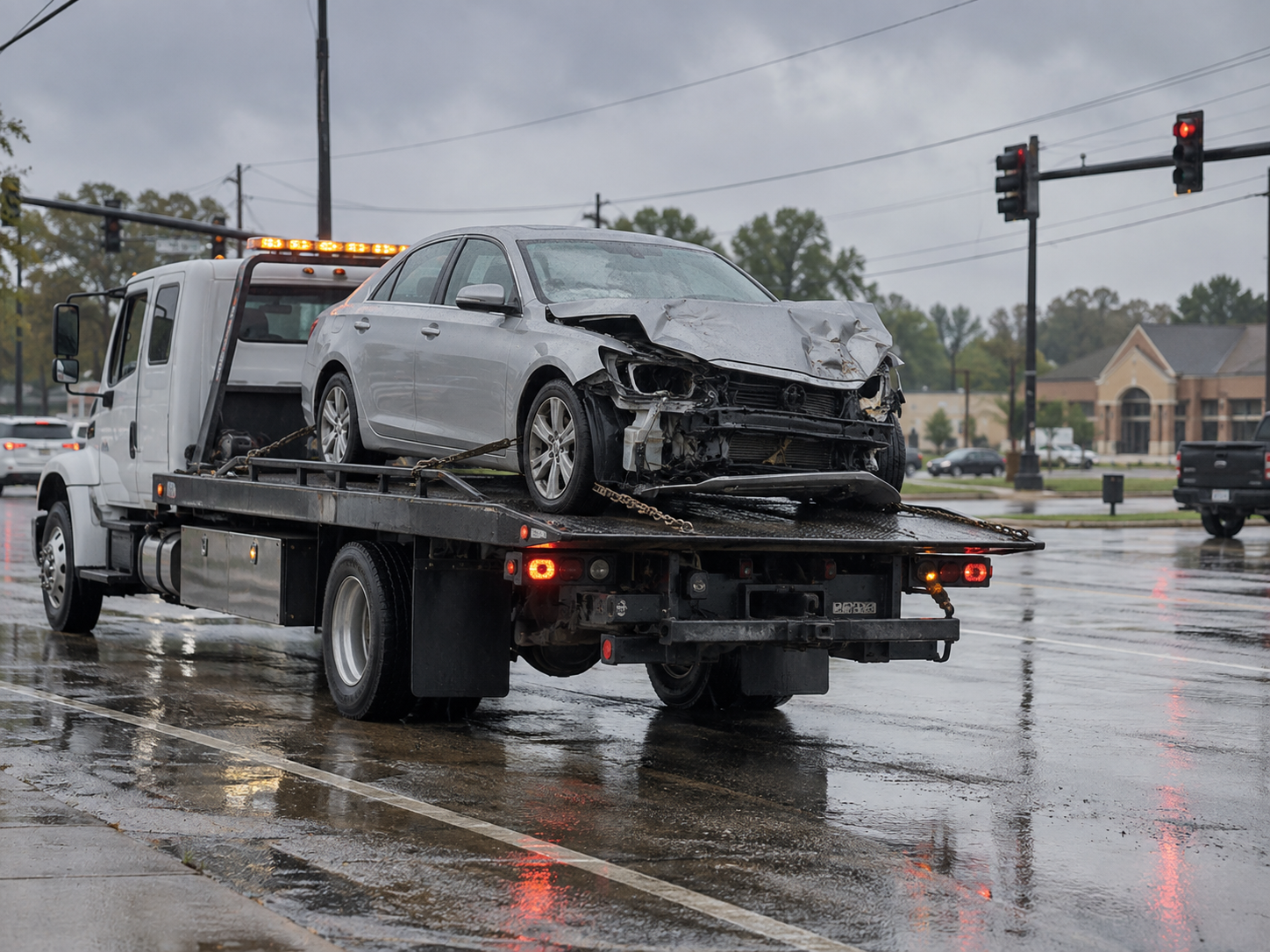
How Damaged Vehicles Are Loaded Safely
A damaged or disabled vehicle cannot always be handled like a routine tow. Bent wheels, broken suspension parts, low ground clearance, loose body panels, or steering damage can all affect how the vehicle needs to be moved onto the truck.
Before loading begins, we look at how the vehicle is positioned and whether it can roll normally. If the wheels are locked, the suspension is compromised, or the vehicle cannot move under its own power, it may need to be winched onto a flatbed rather than driven or pulled into place.
Once the vehicle is positioned correctly, it is secured at appropriate tie-down points so it stays stable during braking, turns, and changes in road grade. The objective is to limit unnecessary movement and avoid placing more stress on components that may already be damaged.
Clear Communication From Pickup Through Delivery
A tow is easier to manage when you know what is happening and why. Before the vehicle is moved, we gather information about what went wrong, where it is located, and where you want it taken.
Those details can affect the entire recovery process. A car with a damaged wheel along I-74 may need a different setup than a non-running vehicle in a parking lot near Illinois State University. Knowing the condition of the vehicle ahead of time also helps determine whether flatbed towing, winching, or another recovery method may be needed.
We aim to keep the process straightforward so you understand how the vehicle will be handled and what to expect from pickup through final drop-off.
Need Flatbed Towing or Vehicle Recovery in Normal?
If your vehicle has collision damage, cannot roll normally, or should not be driven in its current condition, flatbed towing may be the right way to move it. This type of transport is commonly used for low-clearance cars, many AWD and 4WD vehicles, non-running vehicles, and cars with wheel, suspension, or steering damage.
The recovery method depends on the vehicle, where it is stopped, and how easily it can be accessed. A damaged car along I-55 may require a different loading approach than one sitting in a driveway or parking lot in Normal.
When you call, provide your location, vehicle information, visible damage, and where you want the vehicle taken. Those details help determine what equipment is likely to be needed before the truck arrives.