Emergency Towing in Normal, Illinois
When a Vehicle Is No Longer Safe to Drive
A breakdown does not have to leave a vehicle completely dead before towing becomes the right choice. Overheating, collision damage, steering trouble, a failed wheel, or a serious mechanical issue can make continuing the trip unsafe. Normal Towing Pros provides emergency towing throughout Normal and the surrounding Bloomington-Normal area for vehicles that cannot be driven safely.
Common situations that may call for emergency towing include:
- Vehicles that will not start
- Engine or transmission problems
- Overheating
- Damaged wheels or tires
- Steering or suspension failure
- Collision damage
- Major fluid leaks
- Electrical or charging-system problems
- Vehicles that start but cannot move normally
Where the vehicle stops also matters. A breakdown in a parking lot may allow plenty of room to assess and load the car, while a vehicle disabled along I-55, I-74, Veterans Parkway, or another busy road can create a more immediate safety concern. If you are exposed to moving traffic, move yourself and any passengers to a safer location when possible and contact emergency services if there are injuries, fire, or an active roadway hazard.
A tow may still be appropriate even when the engine runs. Continuing to drive with severe overheating, grinding noises, steering problems, leaking fluids, or accident damage can turn a manageable repair into a more serious one. When the vehicle cannot safely make the rest of the trip, transporting it to a repair facility is usually the better next step.
When Is Towing Safer Than Continuing to Drive?
A vehicle should usually be towed when driving it farther could make the damage worse or create a safety risk. Some of the clearest warning signs include:
- Smoke, steam, or a strong burning odor
- A major fluid leak underneath the vehicle
- Grinding noises or severe vibration
- Steering or braking problems
- A visibly damaged wheel or tire
- Collision damage affecting the suspension, wheels, or body
- Engine overheating
- Multiple warning lights combined with poor performance
- A vehicle that starts but will not move or drive normally
One warning light by itself does not always mean you need a tow. The bigger concern is when warning lights appear along with overheating, unusual sounds, leaking fluids, smoke, or a noticeable change in how the vehicle handles. At that point, stopping and having the vehicle transported can help avoid turning a smaller problem into a much larger repair.
What to Expect During an Emergency Tow
Before the vehicle is moved, the towing method should be matched to its condition. A routine breakdown may be handled differently from an AWD vehicle, low-clearance car, or vehicle with damaged wheels or suspension. In some cases, flatbed towing is the better option because the entire vehicle remains off the roadway during transport.
Once the proper equipment is selected, the vehicle is loaded, secured, and taken to the destination you choose. That may be a repair shop, dealership, residence, body shop, storage facility, or another appropriate location. The goal is to move the vehicle without creating additional damage and give you a clear next step after the breakdown.

When a Mechanical Problem Means It’s Time for a Tow
Some breakdowns make it unsafe to keep driving even if the engine is still running. Overheating, transmission trouble, electrical failure, damaged belts or hoses, steering problems, and serious fluid leaks can all leave a vehicle in a condition where continuing the trip may cause more damage.
Around Normal, a mechanical problem can happen on I-55, I-74, Veterans Parkway, a residential street, or in a parking lot near Illinois State University. The location and condition of the vehicle both matter when deciding how it should be moved.
The towing method also depends on details such as drivetrain, ground clearance, wheel condition, and whether the vehicle can roll or steer normally. A routine breakdown may allow a standard tow, while an AWD vehicle, low-clearance car, or vehicle with damaged wheels may be better suited for flatbed transport.
What Information Is Helpful When You Call?
You do not need to diagnose the problem yourself, but a few details can help determine what type of equipment may be needed before the truck arrives.
Helpful information includes:
- Your location or a nearby landmark
- Vehicle year, make, and model
- What happened before the vehicle stopped
- Whether the engine starts
- Whether the vehicle can roll and steer normally
- Any visible damage, fluid leaks, smoke, or unusual noises
- Whether the vehicle is AWD, 4WD, front-wheel drive, or rear-wheel drive if known
- Where you want the vehicle taken
The more clearly you can describe the situation, the easier it is to determine whether roadside assistance, a standard tow, or flatbed transport is the most practical next step.
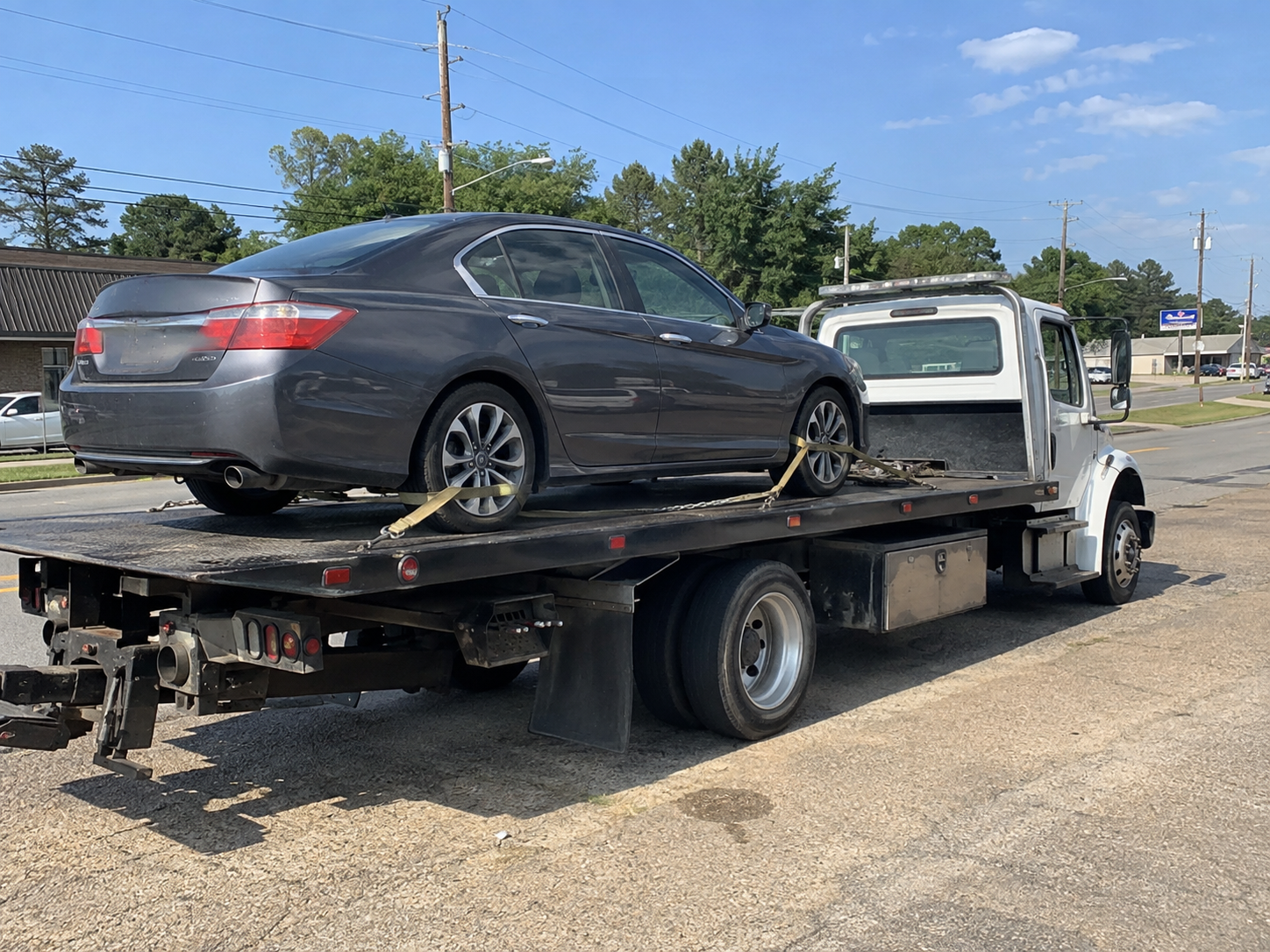
Accident Towing and Collision Recovery
A vehicle can still start after a crash and be unsafe to drive. Damage to the steering, suspension, wheels, cooling system, or body may not always be obvious at first, and continuing the trip can make the problem worse.
We can transport accident-damaged vehicles from the scene to a body shop, repair facility, storage yard, residence, or another requested destination. If the vehicle has damaged wheels, suspension problems, or cannot roll normally, flatbed towing may be the better option.
After a collision, personal safety comes first. Move away from active traffic when possible and follow the directions of police, fire, or other emergency personnel at the scene. A vehicle that is leaking fluid, smoking, sitting unevenly, or no longer steering or braking normally should not be driven.
Once the scene is safe, the next step is determining what equipment is needed to load and transport the vehicle without creating additional damage.
When Roadside Assistance Is No Longer Enough
Some roadside problems can be solved without towing the vehicle. A dead battery may only need a jump-start, a flat tire may be changed with a usable spare, and an empty fuel tank may be handled with fuel delivery.
Other situations require more than a roadside fix. A damaged wheel, missing spare, failed jump-start, overheating issue, steering problem, or mechanical failure can leave the vehicle unsafe to drive even after basic assistance is attempted.
The important question is not simply whether the vehicle can move. It is whether it can continue safely without causing more damage or putting the driver and others at risk. Warning signs such as leaking fluids, grinding noises, severe vibration, collision damage, or steering problems are all reasons to stop driving.
When roadside assistance cannot safely solve the problem, the vehicle can be transported to a repair shop, dealership, residence, or another requested destination. This is especially important along busy routes around Normal such as I-55, I-74, and Veterans Parkway, where remaining stopped near traffic can quickly become a safety concern.
What Determines the Safest Way to Move a Vehicle?
The pickup location is often the first thing that shapes the towing plan. A disabled car on the shoulder of I-55 or I-74 may need to be handled differently from one sitting in a driveway, parking lot, or residential street in Normal. Traffic, available working space, and how the vehicle is positioned all matter before loading starts.
From there, we look at the vehicle itself. Drivetrain, ground clearance, steering, wheel movement, suspension damage, and collision damage can all affect which towing setup makes sense. A car that still rolls normally may be straightforward to move, while an AWD vehicle, low-clearance car, or vehicle with a damaged wheel may be better suited for flatbed transport.
Not every disabled vehicle can simply be driven or pulled onto a truck. Locked wheels, bent suspension parts, or accident damage may require the vehicle to be winched into position instead. Once it is loaded, it is secured and checked so it stays stable during transport.
The goal is to choose the towing method around the actual condition of the vehicle and the circumstances at the pickup point. That helps avoid unnecessary stress on damaged components and gives the driver a clearer idea of what will happen before the vehicle is moved.
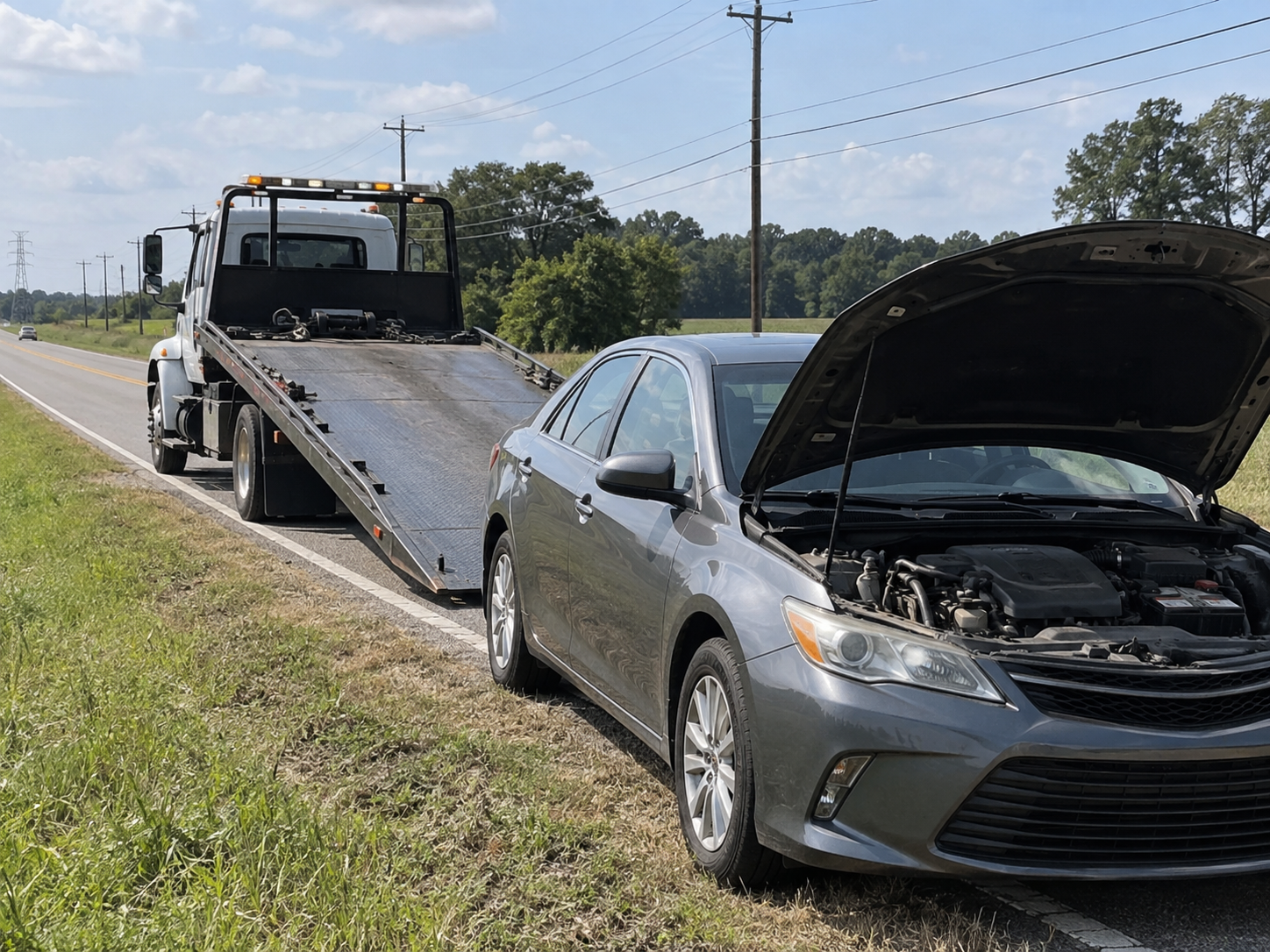
What to Have Ready When You Call for an Emergency Tow
A few details can make it easier to understand the situation before the truck is dispatched. Start with your location, vehicle year, make and model, what happened before the vehicle stopped, and where you would like it taken.
If you are along I-55, I-74, Veterans Parkway, or another busy route around Normal, a nearby exit, intersection, business, or landmark can help pinpoint where you are. It is also useful to mention whether the vehicle is on a shoulder, in a parking lot, blocked in by other cars, or sitting somewhere with limited access.
For accident-damaged vehicles, describe anything that could affect loading. Bent wheels, leaking fluids, deployed airbags, steering problems, damaged suspension, or body panels rubbing against the tires can all change how the vehicle needs to be recovered.
The more clearly the situation is described up front, the easier it is to determine whether standard towing, flatbed transport, winching, or another recovery method is likely to be needed.
How We Decide What Type of Tow Makes Sense
The service should match the vehicle, not the other way around. A car that simply will not start in a parking lot may be straightforward to move, while a damaged SUV along I-74 or an AWD vehicle with drivetrain trouble can require a very different setup.
We look at how the vehicle is sitting, whether the wheels can roll, whether the steering still works, and whether there is damage underneath or around the suspension. Ground clearance and drivetrain also matter when deciding whether conventional towing or a flatbed is the better fit.
If roadside assistance can safely solve the issue, there may be no reason to tow the vehicle at all. When transport is necessary, the goal is to choose equipment that fits the condition of the car and get it to the requested destination without creating additional problems.
Need Emergency Towing in Normal?
A breakdown or collision can interrupt your trip without warning, but the next step should be easier to figure out. If the vehicle will not start, cannot move normally, has accident damage, or is showing signs that make continued driving unsafe, emergency towing can help get it off the road and to a safer destination.
Normal Towing Pros provides 24/7 towing throughout Normal and the surrounding Bloomington-Normal area, including calls on local streets, parking areas, residential neighborhoods, I-55, and I-74.
When you call, tell us where you are, what happened, and where you want the vehicle taken. From there, we can determine what type of towing setup makes the most sense for the situation.